
The philosophy behind the practice
There’s more than one way
to solve an equation.
Your dog, you, the environment, and the way you communicate all influence the outcome. Our job is to understand those variables and build a training approach that makes sense for the team in front of us.
01 / The Canine Equation
Start with the individual
Every dog brings a different set of variables.
The Canine Equation begins with a simple idea: no two dogs arrive with the same history, temperament, habits, or understanding. A puppy learning about the world needs a different starting point from an adult dog rehearsing an established behavior. The household, handler, environment, and goals matter just as much.
That is why we look beyond a single command or problem. We ask what happens before the behavior, how you respond, where it occurs, and what your dog already knows. Your daily routine helps us understand what a realistic training plan should look like. The aim is to work with the dog in front of us, rather than follow a fixed recipe.
An evaluation gives us a chance to discuss your concerns and see how you and your dog communicate. Together, we can identify a starting point, priorities, and the kind of support that fits your situation.
02 / The Canine Equation
Educate the owner, too
Understanding is a skill you take home.
A dog can learn during a lesson, but most of their life happens between lessons. Owner education is therefore a central part of our work. We explain what an exercise is meant to teach, how your timing affects the message, and what to notice when your dog is trying to understand you.
You should be able to ask why a particular exercise or tool has been suggested. We want the process to make sense to you. Knowing the purpose of an exercise makes it easier to practice thoughtfully, notice a change, and tell us when something is not working as expected.
We help you recognize the difference between a dog who has not learned a skill, a dog distracted by the surroundings, and a situation that is simply too difficult at that stage. The next step should follow that understanding, rather than an assumption that the dog is choosing to be difficult.
03 / The Canine Equation
Make communication clearer
Say what you mean. Show what you expect.
Our words, body language, leash handling, and timing all give the dog information. If those messages change from moment to moment, the dog has more to work out. Clear communication means choosing understandable cues and following through in a consistent, teachable way.
We begin with skills the dog can understand in a manageable setting. A cue is introduced alongside guidance and a chance to succeed. As the dog learns, the cue becomes a useful way to ask for that behavior. Everyone involved in the routine should work toward giving the same message.
Consistency is more than repeating a word. It includes when a behavior is rewarded, what the household allows, and what happens next. A clearer pattern helps both dog and owner know what they are practicing.
04 / The Canine Equation
Build the relationship
Be a reliable part of your dog’s world.
Training is a conversation between two living individuals. We want the relationship to support the work, rather than reduce it to a list of commands. Time spent playing, walking, practicing, and resting together is part of that relationship.
Structure gives the dog understandable expectations. Advocacy means paying attention to the situation and speaking up for what your dog needs. That can mean giving a dog space, slowing down an exercise, or choosing a setting where they can learn without being overwhelmed.
Our goal is to help you become a consistent, relevant handler. Confidence grows through small, understandable steps. It is something you and your dog build together through practice, rather than something a particular piece of equipment supplies.
05 / The Canine Equation
Teaching, encouragement & feedback
Our positive balanced approach.
The reference point for our training is the individual dog and handler. We draw from different approaches, using rewards, guidance, structure, and clear feedback as parts of a teaching plan. A technique should have a purpose that can be explained and practiced.
Rewarding a useful behavior helps show the dog what we want to see again. Food, play, attention, or access to something the dog enjoys may be relevant, depending on the individual. We also consider what everyday routines are already encouraging, sometimes without the owner realizing it.
Clear boundaries and feedback belong within a plan that teaches an alternative. Before expecting a response, we consider whether the dog understands the exercise and whether the environment is appropriate. Training should involve observation and adjustment, rather than repeating an approach simply because it worked for another dog.
The terms positive and negative in learning theory describe adding or removing something; they are not labels for good or bad dogs. We explain the practical meaning of the approach used in your lessons so you can make informed decisions and carry the work into daily life.
06 / The Canine Equation
Tools support the teaching
The equipment is only one variable.
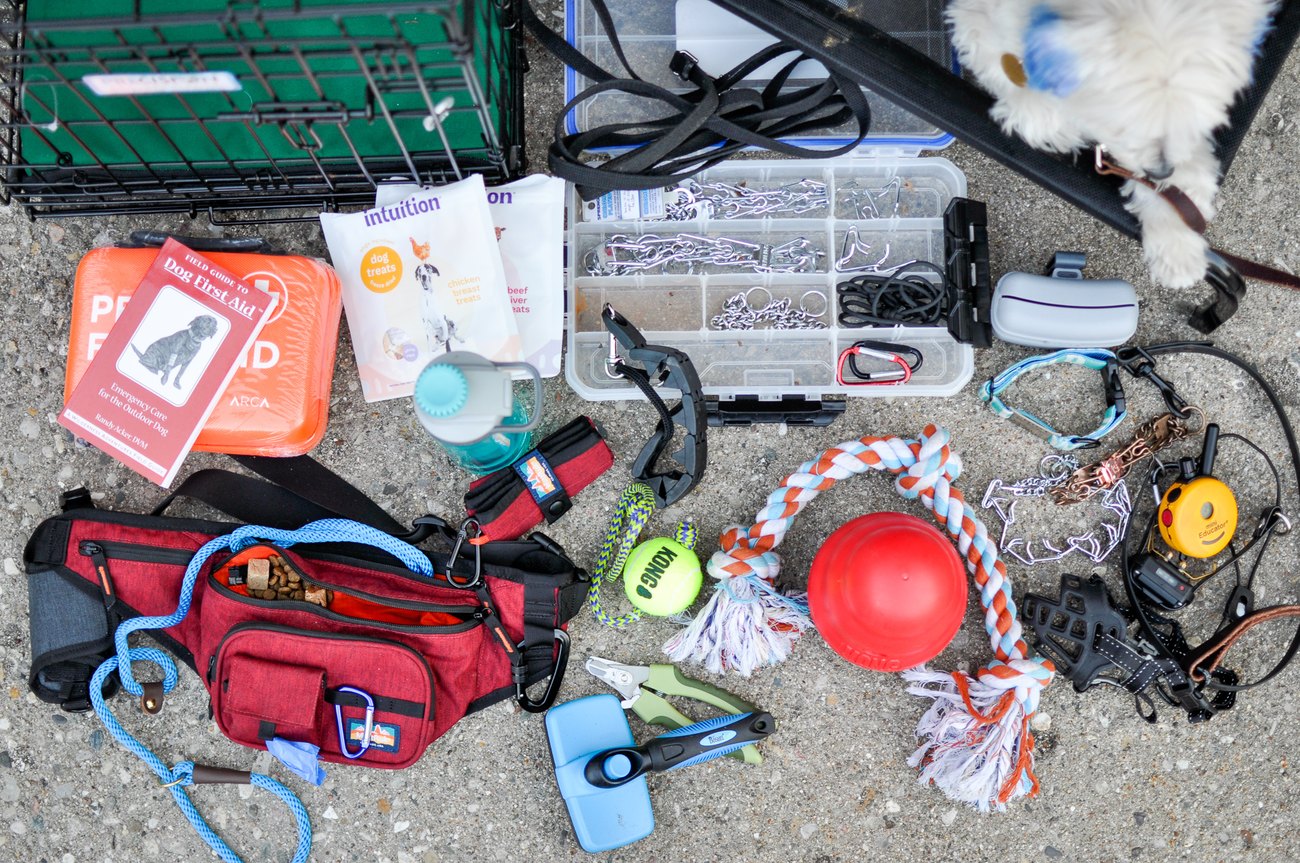
A leash, collar, long line, reward, or remote training aid can be part of a training plan. None replaces a foundation of understanding. Choosing equipment begins with the dog, the task, the handler, and the reason that tool might help.
Advanced training may include remote training equipment when it suits the individual dog and the goals. We discuss what is being proposed and how it fits the plan. Handling, fit, timing, and owner understanding matter; equipment should not be treated as a shortcut or copied from another dog’s program.
You should know what equipment is recommended, what it costs, and what instruction is needed before using it in your own routine. Equipment sent home is billed separately from sessions. If you have questions or concerns about an item, bring them into the conversation before moving forward.
07 / The Canine Equation
Bring the lessons into everyday life
Useful skills need useful practice.
Obedience becomes valuable when it supports the life you share. That might mean settling while the household is busy, walking with better communication, coming when called in an appropriate setting, or waiting while a door is opened. We connect the practice to the situations that matter to you.
Learning in a quiet place is different from using the same skill around another dog, a visitor, or an interesting smell. We build difficulty gradually and pay attention to how the dog responds. The environment is a variable we can change, rather than something the dog is expected to ignore immediately.
Short, consistent opportunities to practice can fit into your existing routine. Keep track of what is improving and what still feels difficult. Those observations help shape the next lesson and keep the work connected to real life.
08 / The Canine Equation
Adjust the equation as you progress
Progress is individual, too.
A training plan is a starting point, not a promise that every dog will progress on the same timetable. The dog’s learning history, the owner’s practice, the surroundings, and the goal all influence the work. We revisit the plan as those variables change.
When an exercise becomes difficult, we look for useful information. Is the cue understood? Has the setting changed? Is the task too demanding at this stage? Reviewing those questions helps us choose a practical next step, rather than simply asking for more repetitions.
Bring your questions, successes, and setbacks to the conversation. One-on-one lessons, focused sessions, and video support offer different ways to work together. The aim is a dog and handler who understand more, communicate more clearly, and have a plan they can continue using.
09 / Your questions
Let’s talk it through.
Does every dog use the same training plan?
No. We consider the dog, owner, goals, and environment before recommending an approach. We revisit the plan as the work develops.
Do I take part in the training?
Yes. Owner education is one of our primary focuses. We want you to understand the work and be able to continue practicing with your dog.
What if I am unsure about a tool or technique?
Ask before moving forward. A recommendation should come with an explanation of its purpose, any costs, and the handling instruction involved.
How do I choose the right service?
Start by telling us what you need. For training, an evaluation helps us discuss your goals and identify an appropriate program. Walking and pet sitting begin with an introductory conversation and meet-and-greet.
Your next chapter starts here
Let’s solve your equation.
Tell us what life with your dog looks like — and what you want it to become.